China’s Vehicle Exports Rise Broadly in 2025, Electric Cars Lead Growth
Chinese car exports expand strongly across key global markets in 2025

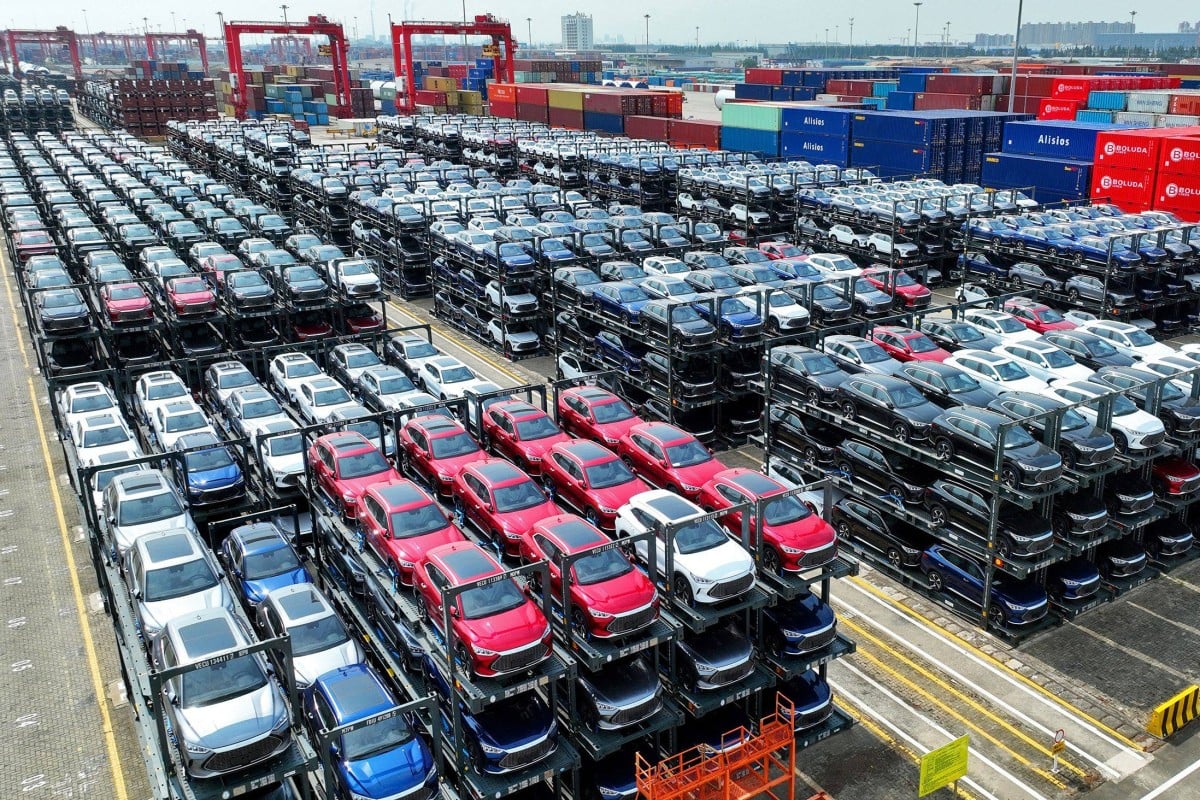
Export Growth in Most Markets
China has continued to expand its automotive exports in 2025, with exports climbing across a wide range of international destinations, according to the Institute for Energy Research (IER). Chinese vehicles — especially new energy vehicles (NEVs) including battery electric vehicles (BEVs) and plug-in hybrids (PHEVs) — have reached record export volumes in markets spanning Asia, Europe, the Middle East, Africa, and the Americas.
In the first nine months of the year, top export destinations for Chinese vehicles included:
- Mexico
- United Arab Emirates (UAE)
- Russia
- Belgium
- United Kingdom
- Saudi Arabia
- Australia
- Brazil
- Philippines
- Kazakhstan
This multi-continent footprint reflects a broadening buyer base for Chinese vehicles beyond traditional markets, with Africa emerging as the fastest-growing region for Chinese EV imports — up 184% year-on-year.
Strong Performance in Key Regions
Chinese automakers such as BYD, Geely, and Chery have expanded their global reach, leveraging competitive pricing, localized model offerings, and rising demand for electric mobility. China’s electric vehicle sector now accounts for a significant share of its overall vehicle exports, with annual NEV exports growing rapidly as part of a broader global electrification trend.
China’s auto exports have gained traction in most major markets in 2025, underlining the global competitiveness of its automotive industry.
Recent export trends also show that Chinese vehicles are becoming increasingly relevant not just in developing markets but in developed economies like the UK and parts of Europe, where demand for affordable electric vehicles is rising.
NEV Export Highlights
- Chinese NEV export volumes have risen sharply in 2025, with some analyses suggesting they may surpass 2 million units for the first time.
- Chinese brands are actively introducing right-hand-drive (RHD) models to enter markets such as Australia, Southeast Asia, and the UK.
- BEV exports remain robust, while PHEV exports have gained market share in regions with tariff barriers on pure electrics.
Shifting Global Auto Trade Patterns
The surge in Chinese vehicle exports has shifted global automotive trade dynamics. In many markets that historically imported Japanese or European cars, Chinese brands are now capturing increasing market share thanks to expanding dealer networks, value pricing, and localized product adaptation.
For example, China’s total vehicle exports through the first 10 months of 2025 rose by more than 15% year-on-year, placing China well ahead of other key exporters.
This outward growth is supported by improvements in manufacturing scale, global logistics, and product diversification — including compact EVs, SUVs, and PHEV variants tailored to local preferences.
Factors Driving Chinese Auto Export Expansion
- Competitive pricing: Chinese vehicles often offer high value at lower price points.
- Global dealer networks: Expanded international distribution and service infrastructure.
- Localized model offerings: RHD variants and region-specific specifications.
- EV demand growth: Rapid adoption of NEVs in emerging and developed markets.
What This Means for Global Automotive Markets
China’s export success carries implications for global competition, supply chains, and market share dynamics. As Chinese brands continue to grow abroad, traditional automakers face increasing pressure to innovate, localize, and respond to shifting consumer preferences — especially in electric mobility.
These developments are part of a broader pattern in which China is not only the world’s largest auto producer and domestic market but is also becoming a major global vehicle exporter across multiple regions.
Похожие материалы
Будьте в курсе EV-новостей
Получайте свежие новости и аналитику о китайских электромобилях на электронную почту