China’s NEV Sales Reach 1.823 Million in November, Exports Jump 160% YoY
China’s NEV market keeps strong growth as exports multiply year-on-year

Robust Growth in Domestic Market
China’s new energy vehicle (NEV) industry continued to demonstrate strong resilience and global competitiveness in November 2025, according to data released by the China Association of Automobile Manufacturers (CAAM). Both production and sales exceeded 1.8 million units, a year-on-year increase of over 20%, reaffirming China’s status as the world’s largest NEV producer and market.
The consistent growth highlights the country’s progress in expanding charging infrastructure, improving battery supply chains, and supporting consumer incentives that continue to stimulate adoption across both urban and rural regions.
Monthly and Year-to-Date NEV Statistics
| Category | November 2025 | Jan–Nov 2025 | YoY Growth |
|---|---|---|---|
| NEV Production | 1.88M | 14.907M | +20.0% |
| NEV Sales | 1.823M | 14.78M | +20.6% |
| NEV Exports (Total) | 300,000 | 2.315M | +160% |
| Passenger NEV Exports | 294,000 | 2.238M | +160% |
Source: China Association of Automobile Manufacturers (CAAM), December 2025.
China’s NEV exports have entered a new phase of maturity. With domestic demand stable and overseas orders accelerating, Chinese automakers are now global leaders in both production and technology,
Rising Export Momentum
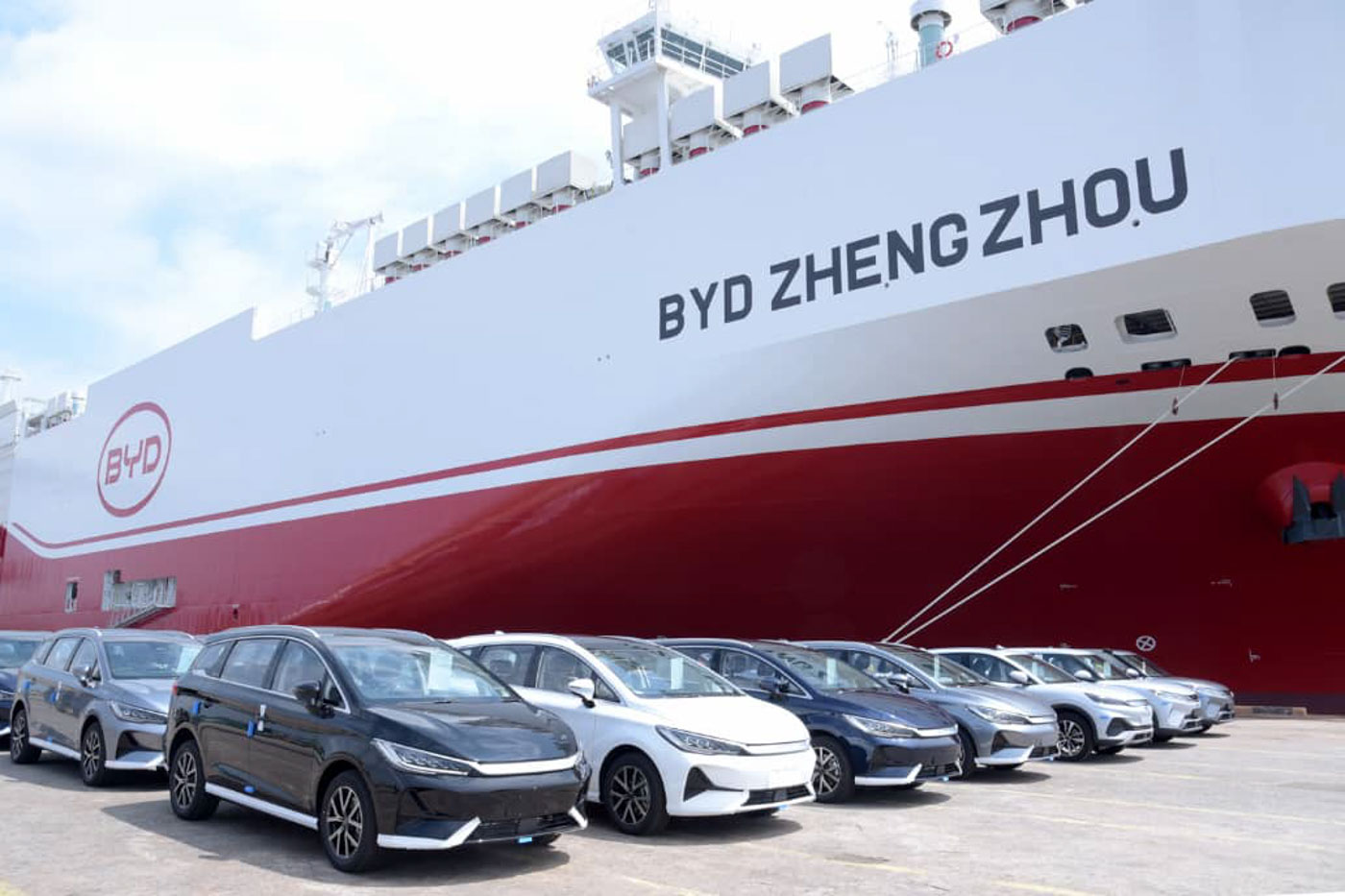
Exports have become a major growth engine for China’s NEV sector. In November alone, Chinese manufacturers exported 300,000 NEVs, marking a 2.6× increase year-on-year.
The export boom reflects the success of China’s push to globalize its electric vehicle brands, particularly in Europe, Latin America, and Southeast Asia.
Key Export Trends
- Battery Electric Vehicles (BEVs): 177,000 exported in November, doubling YoY as demand surged in the European Union and Southeast Asia.
- Plug-in Hybrid Electric Vehicles (PHEVs): 124,000 exported, a fourfold increase YoY, driven by consumer preference for range flexibility.
- Top destinations: Europe, the Middle East, and ASEAN markets, where affordability and charging accessibility make Chinese models appealing.
Industry experts note that export growth is being supported by improved logistics, port capacity, and favorable trade agreements with partner countries.
Domestic Market Holds Firm
Despite growing export focus, domestic NEV sales remained solid.
In November, Chinese consumers purchased 1.522 million NEVs, including 1.425 million passenger vehicles, accounting for 53.2% of all new car sales nationwide. This marks the fifth consecutive month that NEVs captured more than half of China’s passenger vehicle market.
Domestic sales were led by major players such as BYD, Geely, Changan, and SAIC, while newcomers including HIMA, Leapmotor, and Xiaomi Auto continued rapid expansion.
Consumer interest in plug-in hybrids has also increased as brands improve powertrain efficiency and battery range.
Policy and Infrastructure Support
The government continues to provide a supportive environment for NEV development.
Recent measures include expanding charging networks to smaller cities, enhancing battery recycling programs, and encouraging R&D investment in next-generation technologies like solid-state batteries and intelligent driving systems.
These initiatives not only sustain domestic demand but also improve the long-term competitiveness of Chinese EV exporters.
Factors Driving China’s NEV Boom
- Comprehensive Supply Chain: From battery cells to semiconductors, localized production reduces costs.
- Export Incentives: Policy support enables automakers to expand rapidly into overseas markets.
- Consumer Trust: Improved after-sales service and warranty systems strengthen buyer confidence.
- Technological Innovation: Continuous breakthroughs in energy density and smart cockpit features enhance product appeal.
Global Impact and Outlook
The acceleration of both domestic and international NEV deliveries positions China as the anchor of global EV growth.
Analysts expect China’s total NEV exports to exceed 2.5 million units in 2025, with further gains anticipated in 2026 as European and Middle Eastern demand strengthens.
At the same time, increased competition among Chinese brands could spur further technological innovation and price optimization.
Похожие материалы
Будьте в курсе EV-новостей
Получайте свежие новости и аналитику о китайских электромобилях на электронную почту